
Hardeman County Sex Offender Checks
The Texas Department of Public Safety manages the Texas Public Sex Offender Registry under Code of Criminal Procedure Chapter 62. It is the main public search for Hardeman County. The registry can be searched by a person's name or by location. Results reflect data sent by local registration authorities and should be read with the profile's status and verification dates.
Local registration follows the place of residence. Quanah states that law enforcement is combined with Hardeman County, so the sheriff is the verified Quanah contact. Chillicothe lists a police department contact, but its indexed official pages do not name a registration counter or hours. A Chillicothe resident or reporter should confirm the responsible office with city police or the sheriff rather than assume a schedule.
Texas Public Sex Offender Registry Searches
The Texas registry supports both person and place searches. County mode builds a local result pool for Hardeman County. Name mode is useful when the spelling is known. Address, city, ZIP, radius, and map tools can show records tied to a place, although the exact interface and radius choices may change. Use only the fields shown on the live portal and open the detailed profile before drawing a conclusion.
- Open the Texas DPS registry and review its conditions of use.
- Select Hardeman County or enter a Quanah or Chillicothe location; use name mode when a person is known.
- Compare the result list by full name, aliases, age, description, address, and status.
- Open the profile and read the verification date, registering authority, offense, and current registration details.
- Report suspected bad or stale information to the local authority instead of contacting the person shown.
| Field | Type | Required | Use |
|---|---|---|---|
| Last Name | Text | Name mode | Search other known spellings or aliases separately. |
| First Name | Text | Optional | Narrows a name result. |
| Address | Text | Location mode | Supplies a street, city, or ZIP point for proximity results. |
| City | Text or dropdown | Optional | Use Quanah or Chillicothe as shown by the interface. |
| ZIP Code | Text | Optional | Use 79252 or 79225 as applicable. |
| County | Dropdown | Optional | Select Hardeman for the county result pool. |
| Radius | Dropdown or map | Location mode | Use the exact distance choices on the live portal. |
| Search / Clear | Buttons | Not applicable | Runs or resets the selected search. |
The DPS registry search form shows the current search controls.
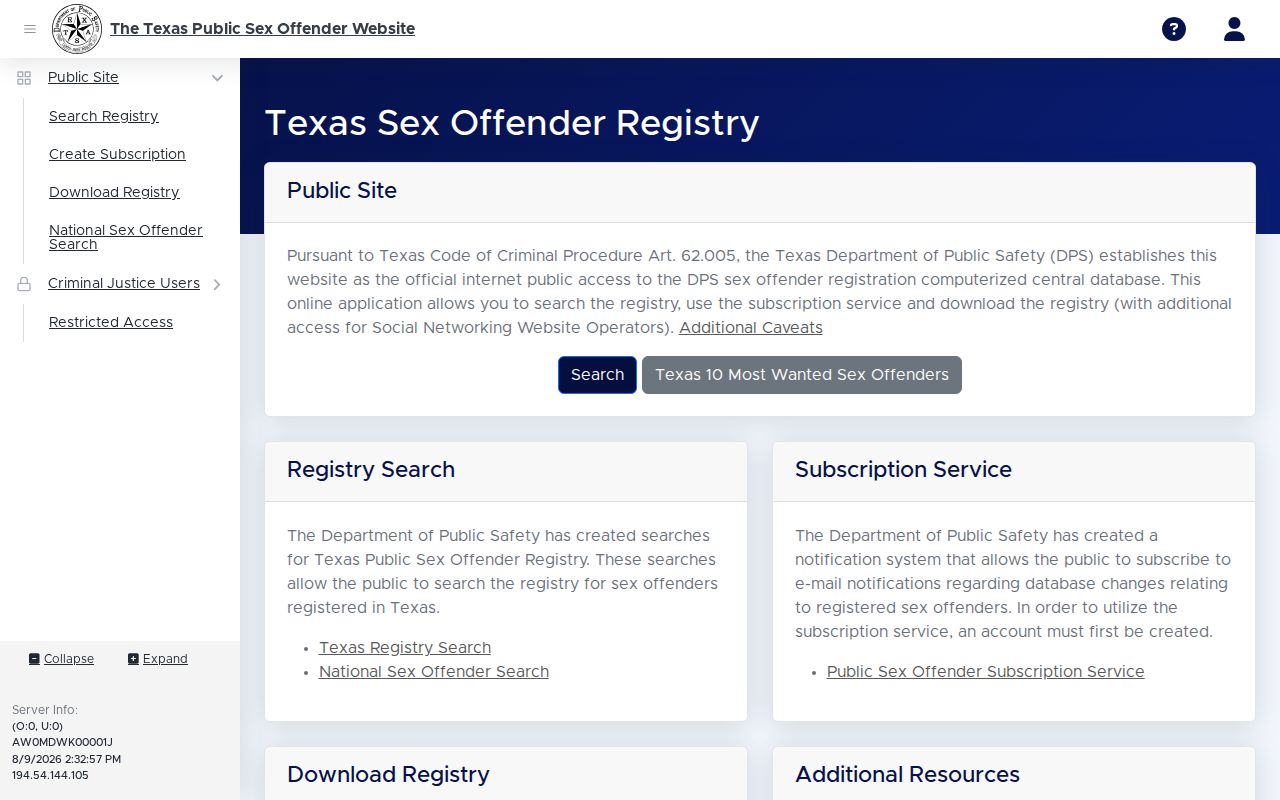
The form is the official search layer; it is not a live tracking service and depends on reported address data.
Hardeman County Registry Address or Name Search?
Choose the mode that fits the safety question. A Hardeman County filter shows the registered profiles associated with the county at the time of the search. A name query can locate a known person across Texas, but spelling and aliases matter. An address or radius search can support awareness near a home, school, or route, yet its center point and the live portal's distance options control the output.
| Search mode | Best use | Limit |
|---|---|---|
| County | Review the current Hardeman County result pool | Only reflects records linked to the county in agency data |
| Name | Check a known name and aliases statewide | Similar names require profile-level identity review |
| Address or ZIP | Review records tied to an area | Not real-time surveillance; reported addresses can change |
| Radius or map | See proximity from a chosen point | Options can change as the portal is revised |
Save the search date and open the detailed jurisdiction record. A map dot alone does not show all profile context.
Registry Profiles: What They Show
A Texas public profile combines identity, location, registration, and offense data. Review the record as a whole. The address date and status can be as important as the address itself. DPS withholds several sensitive fields, so a profile is not the agency's full registration file. Juvenile data may also be made nonpublic by court order.
| Name and Aliases | The public name set used to help distinguish one profile from another. |
|---|---|
| Photo and Description | Photograph, sex, race, age or birth data, height, weight, hair, eyes, scars, marks, and tattoos where public. |
| Registered Address | The address supplied through registration, read with update and verification information. |
| Offense | Description, statute, and conviction or adjudication date, plus public victim age or sex categories where allowed. |
| Risk and Duration Data | Risk level where assigned and registration information; Texas does not reduce every duty to federal tiers. |
| Status | Registration status, verification information, and registering authority, including compliance concerns where displayed. |
| Vehicle Information | Specified vehicle data when it is among the public fields. |
DPS keeps Social Security numbers, driver-license numbers, phone numbers, online identifiers, employer details, confidential DPS additions, and victim-identifying data off the public profile.
Limits of Hardeman County Registry Profiles
A profile should not be read as an all-purpose file. It publishes the data authorized for public awareness under Texas law. It omits protected identity and contact data, and it can reflect reporting delays. A Hardeman County address result is not proof that a person is physically present at that spot at the moment of the search. Nor does no result guarantee that no unregistered or noncompliant person is nearby.
If an address seems stale, compare the registration status and verification date. Note the registering authority. Contact the sheriff or the identified city authority with the specific concern. Do not visit the address, question neighbors, or confront the person shown. Law enforcement can compare the public display with the official registration file and decide whether follow-up is needed.
Note: Registry dates are reported checkpoints, not live location signals, and a Hardeman County profile should be verified through its listed authority.
Registration Levels and Duties in Texas
Texas registration duration is driven by the offense and Chapter 62, not by a simple public Tier I, II, and III chart. Code of Criminal Procedure Article 62.101 broadly assigns lifetime registration to listed serious offenses and statuses, and ten years after release or discharge from control for other reportable convictions or adjudications. Juvenile, repeat-offense, civil-commitment, and early-termination rules add important detail.
| Texas category | General duration | Visibility and verification caution |
|---|---|---|
| Article 62.101(a) listed offenses or statuses | Lifetime | Read the exact offense, repeat-offense rules, profile status, and assigned reporting frequency. |
| Other reportable conviction or adjudication | Ten years after release, discharge, parole, or community supervision as the statute defines | The period does not simply start on the conviction date. |
| Juvenile registration | Court and statute specific | A court order can restrict public access. |
| Early termination | Only through an eligible statutory risk-assessment and court process | Removal is not automatic. |
Verification may occur annually, every ninety days, or under a special rule based on risk, status, and offense. The public profile and local authority are safer sources than a private calculation of any person's end date.
Hardeman County Registry Searches Across State Lines
Hardeman County sits at Texas's northern edge, so a safety search may cross into Oklahoma or another state. The U.S. Department of Justice National Sex Offender Public Website searches participating jurisdiction registries from one official national entry point.
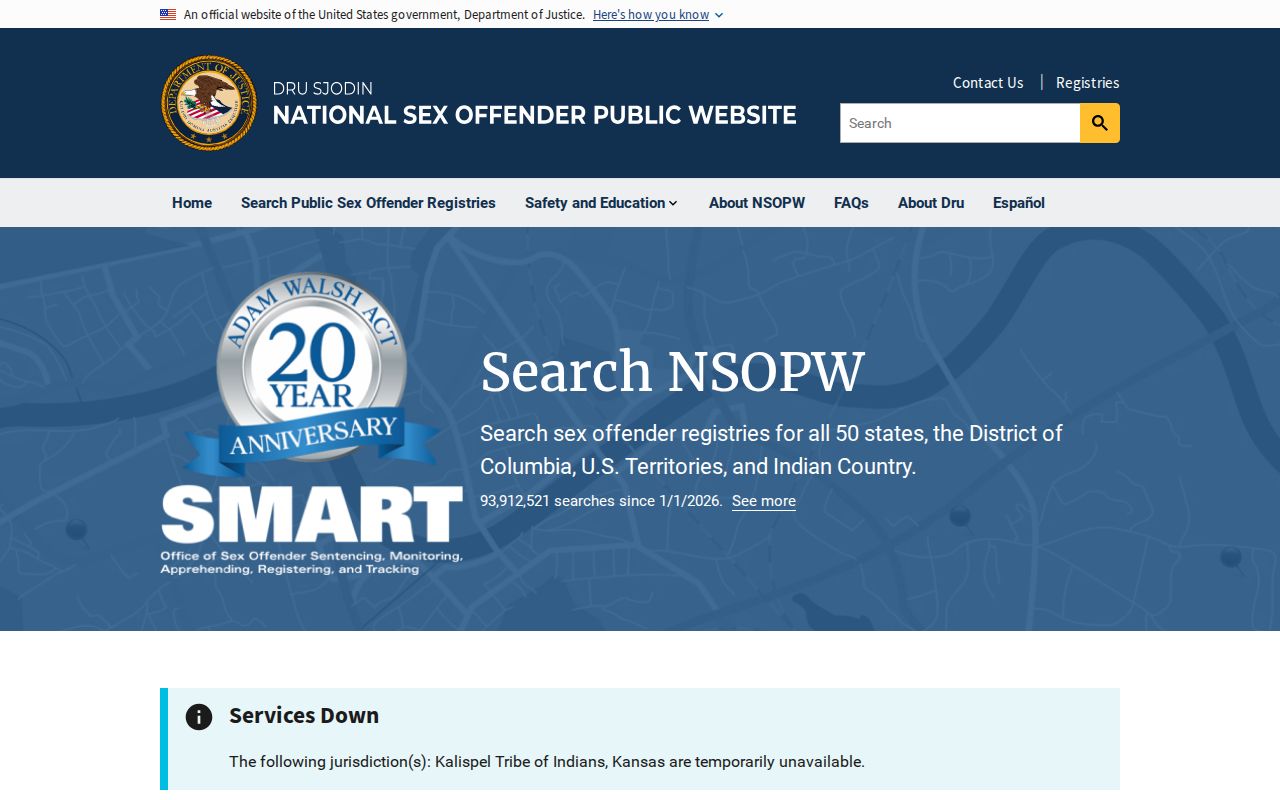
NSOPW is a useful cross-state layer, but the originating state or tribal profile remains the detailed source. Open that jurisdiction's record to see the current fields and reporting authority.
Repeat the name with known aliases and use location searches on both sides of a border when appropriate. Search results can differ because each jurisdiction supplies its own data, definitions, and update cycle.
Hardeman County Community Registry Notices
Texas public notification includes the DPS website and local registry work. The law may also require local publication or mailed community postcards when a high-risk registrant or a civilly committed sexually violent predator moves into a community. The local authority conducts verification, makes required school notice, and sends registry data to DPS.
The Texas DPS registration program overview explains the statewide structure.
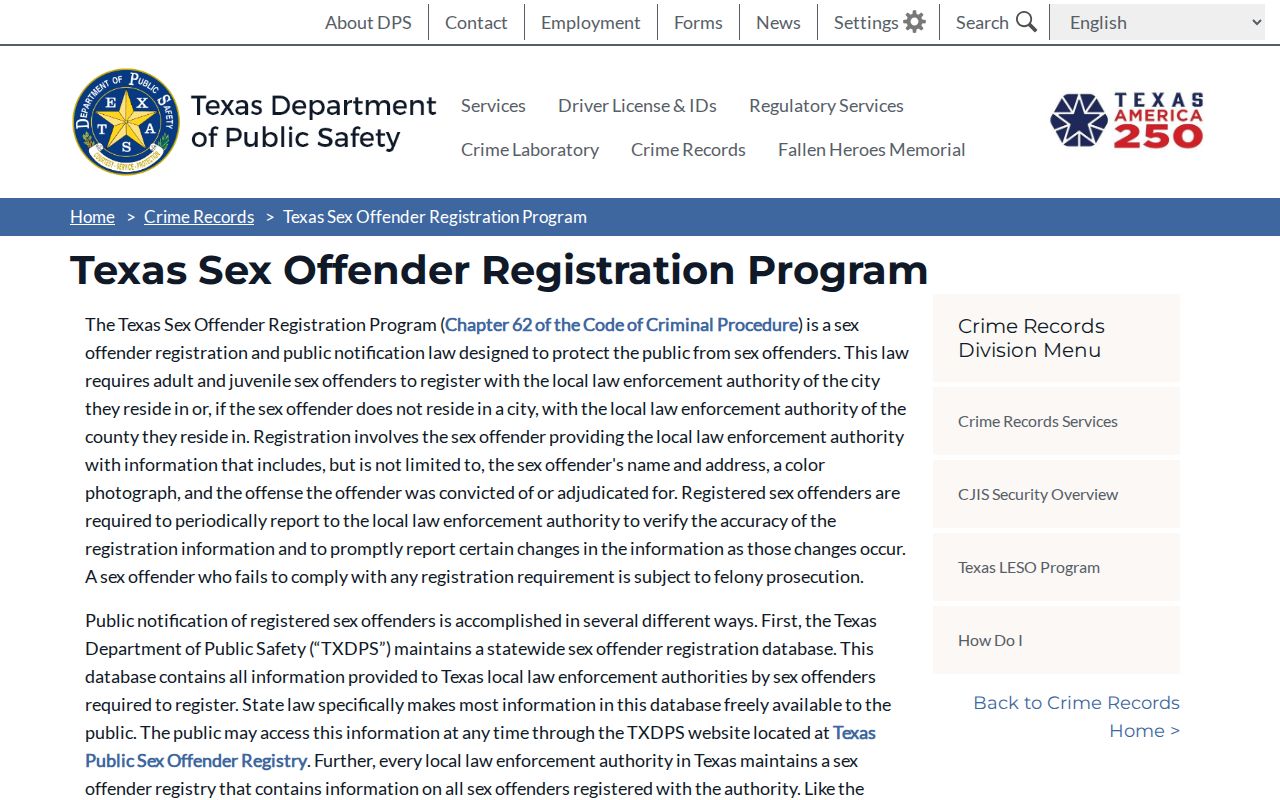
The overview supplies legal and program context, while the public registry supplies the searchable Hardeman County profiles.
Texas has no single statewide residency-distance rule that applies to every registrant in all places. No official Hardeman County ordinance establishing one universal distance was found. Do not infer a local rule from another city or county.
Reporting a Hardeman County Registry Concern
When a profile address looks wrong or a person appears noncompliant, record the profile name, public identifier, status, registering authority, address, verification date, and the reason for concern. Contact the listed authority or the Hardeman County Sheriff at (940) 663-5374. Use 911 only for an emergency. Law enforcement can assess the report against information that is not public.
- Reopen the official profile and confirm that the name and descriptive data match the intended record.
- Note the public address, status, verification date, and registering authority.
- Describe the observed issue without assumptions, threats, or direct contact.
- Send the concern to the registering office or sheriff and retain the date of the report.
Community awareness works best when concerns go to the agency charged with verification. Confrontation can put residents, families, and officers at risk.
Using Registry Information Lawfully
Hardeman County registry information exists for public awareness and safety planning. It does not authorize harassment, threats, intimidation, vigilantism, trespass, or discrimination. Read the official profile, keep the data in context, and report a suspected violation to law enforcement. DPS also warns that registry information depends on data supplied by registrants and local authorities.
Misuse is unlawful: Texas Code of Criminal Procedure Chapter 62 governs public registry information, and using it to harass, threaten, or intimidate can lead to criminal or civil liability. Do not confront a registrant or household.
Verify status and dates before sharing a concern. A past offense entry does not state that a new crime occurred. If the question involves a separate filed criminal cause, the official Hardeman County court case lookup channels can establish that court record without turning registry data into an accusation.